Wednesday, April 27, 2011

Humor as a tool against the authorities - Jeremy Goldkorn

goldkorn_3Jeremy Goldkorn by Fantake via Flickr
An active and vibrant internet culture trying to push the limits, describes internet expert Jeremy Goldkorn in this video produced by the Asia Society. Humor as a tool against censorship.
(Jeremy's comments after the cartoon).

Jeremy Goldkorn in a speaker at the China Speakers Bureau. Do you need him at your meeting or conference? Do get in touch.


Enhanced by Zemanta

Labels: , , , ,

Tuesday, April 26, 2011

All foreign books to be banned in China? - Bill Dodson

BD_Casual2v2revImage by Fantake via Flickr
Bill Dodson
Celebrity author Bill Dodson just discovered by accident that his succesful book China Inside Out has been taken off the shelves of a book store in Suzhou. It might be the start of more, he reports at his weblog. In the end all foreign books might be banned in China.
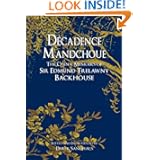
China Inside Out apparently caught the attention of the Fahrenheit 451 brigade in Suzhou. I’d gone down to the local branch of the Bookworm this past Sunday to kick-off a Royal Asiatic Society author’s talk on Edmund Backhouse’s Decadence Mandchoue, as bawdy an historical narrative as one will ever find. A friend at the shop told me my book had caused a bit of a stir a few days before with the local F451. I thought he was kidding.
The proprietor confirmed after the Decadence talk that, indeed, F451 had been to the shop, saw the nice little display for the book set up at the front bar; and politely asked that the book be removed. In all fairness, it’s not the first time the shop has been targeted. And it won’t be the last time, either. Apparently, F451 will shortly be requiring ALL books written by foreigners be taken down from the shelves.
Regime change has central and local authorities more brittle than at any time in twenty years.
The country just can’t seem to break out of some cycles.
Bill Dodson is a speaker at the China Speakers Bureau. Do you need him (and his books) at your meeting or conference? Do get in touch.
Enhanced by Zemanta

Labels: , , , ,

Monday, December 20, 2010

Facebook should be in China - Kaiser Kuo

Kaiser HeadshotKaiser Kuo via Flickr
Baidu spokesperson Kaiser Kuo triggered off many comments, as he wrote during the visit of Facebook's CEO Mark Zuckerberg to Beijing, that the largest social platform should also come to China. Zuckerberg visited Baidu's headquarter and had lunch with its CEO Robin Li.
Kaiser Kuo (in the Q&A Answer service Quora, here quoted in Forbes)
…a Facebook entry into China would be fraught with challenges but personally I believe that having Facebook in China, even if it were compelled to abide by China’s strict censorship requirements, would still be better than not having it here. I believe that it would be a net positive for China’s Internet users. More connectivity is better than less. I felt the same way when Google entered China and acquiesced to the demands of censors: Even though they were censored, they nevertheless helped to expand the information horizons of Chinese Internet users, and I’m very thankful that some compromise was arrived at.
He admits such a move would not be without problems, in the debate that follows:
But yeah, I agree that it would be difficult. And if they did something like this it would bring down a major storm of condemnation from rights groups
Commercial
Kaiser Kuo is a speaker at the China Speakers Bureau. When you need him at your meeting or conference, do get in touch.

Labels: , , ,

Friday, December 10, 2010

The sensitive words on the internet today - Jeremy Goldkorn

Goldkorn_for_screenJeremy Goldkorn by Fantake via Flickr
Jeremy Goldkorn of the media site Danwei explains to CNN how China's domestic internet companies deal with sensitive issues, to prevent them from getting into trouble with the internet censors.
Internet companies in China are treating Chinese characters for "Liu Xiaobo," "Nobel," and peace prize as "sensitive words," said Jeremy Goldkorn, editor of Danwei.org -- a website about Chinese media and Internet. Acting on government instructions, the companies are deleting text containing those words, preventing such text from being uploaded, or returning no results on searches for the words, he said.
"I think the main aim is to reduce the chances of Chinese citizens seeing that the Liu Xiaobo Nobel Prize is big news internationally, and to make it more difficult for articles sympathetic to Liu Xiaobo and photos of him to be copied and circulated inside China," Goldkorn said.
Many foreign websites hit the international filters of China's censors, or are block altogether. As is Goldkorn's website Danwei.

Commercial 
Jeremy Goldkorn is a speaker at the China Speakers Bureau. When you need him at your meeting or conference, do get in touch.

Labels: , , , , ,